
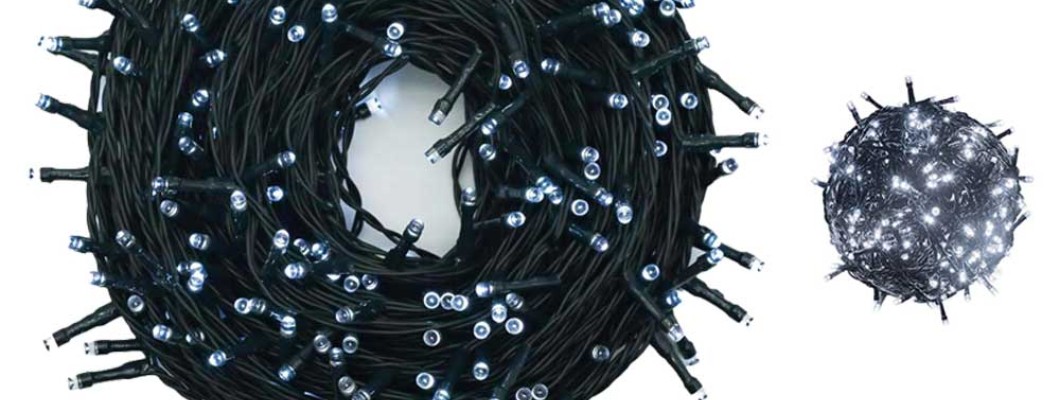
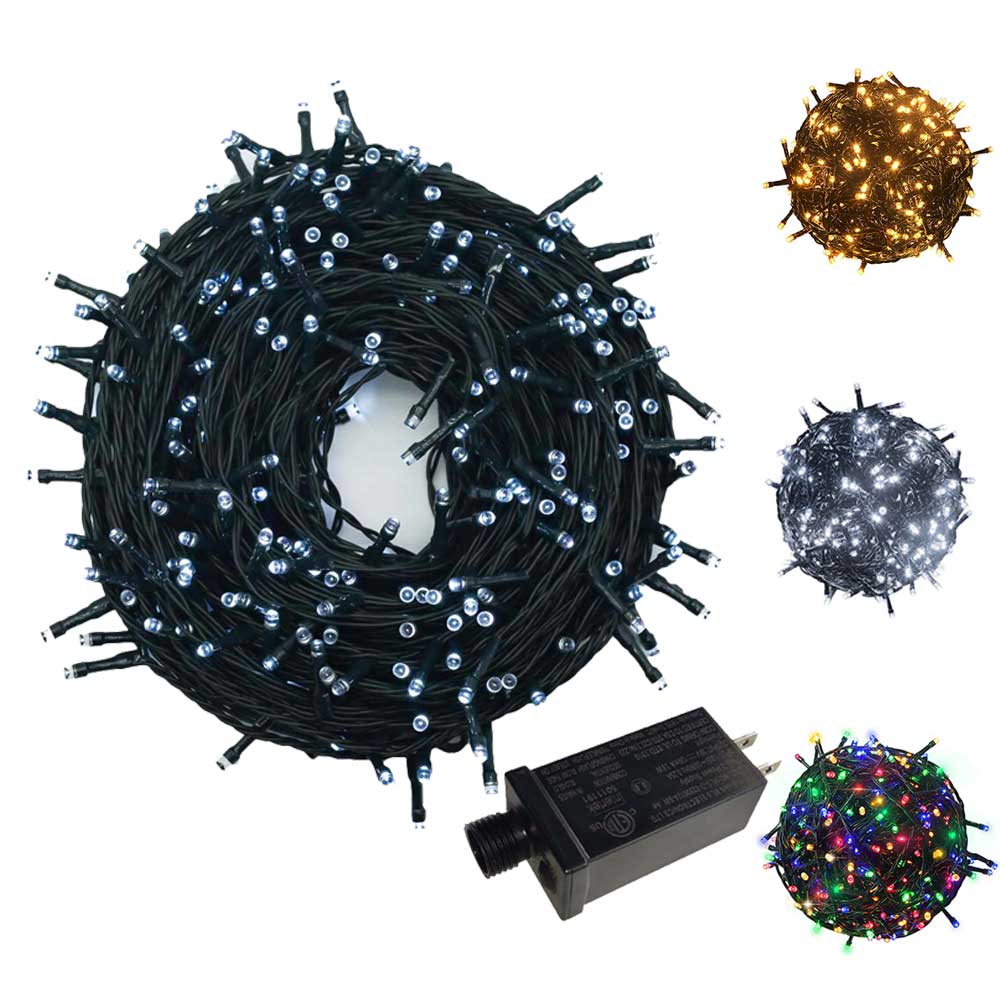
Christmas lights are more than decoration - they set the mood for the entire season. But walk into any store (or scroll any marketplace) and the sheer number of options is overwhelming: string lights, icicle lights, curtain lights, fairy lights, net lights, bunch lights, solar, plug-in, USB, battery - each with eight lighting modes, two colour temperatures, three lengths, and a dozen "waterproof" claims.
This guide cuts through the noise. Whether you're lighting a single windowsill or dressing a full storefront, it gives you a decision framework that's easy to apply - and it's written by a factory that ships these products every day, so the specs we reference are the same ones on our production lines.
1. Pick the Light Type by Space
The single biggest mistake is buying a light type for the wrong space. Each format has a natural job:
- String lights - the versatile workhorse. Great for garlands, tree wrap, railings, and outlining. See our 300-count string lights with 8 lighting modes for a classic choice.
- Icicle lights - for eaves, rooflines and gables. The vertical drops create the "snow-falling" effect. Our 300 LED icicle lights are a popular eave option.
- Curtain lights - for windows and flat surfaces. The 360-LED window curtain string light covers a 9.8ft x 6.6ft window in one string.
- Fairy / copper-wire lights - for delicate, warm, "floating" looks. Perfect for tables, vases, mantels, and photo backdrops. Our 400 LED flexible copper-wire fairy lights are a good starting point.
- Net lights - for hedges, bushes, and large trees. They drape instead of strand.
- Bunch lights - for tree canopies where you want clusters, not lines.
If you're not sure, start with the space, not the bulb. A 60-ft garland needs a 60-ft string; a 5-ft window needs a curtain light - not the other way around.
2. Choose the Right Colour Temperature
"Warm white" and "cool white" are not synonyms. They produce very different moods:
- Warm white (2700-3000K) - cosy, inviting, "classic Christmas." Best for indoor, for homes, for candle-style ambience.
- Cool white (5500-6500K) - crisp, "frozen" look. Popular for commercial storefronts and ice-sculpture aesthetics.
- Dual-colour / multicolour - for parties, kids, and playful spaces. Our 300 LED dual-colour twinkling string lights offer three mixed-flash modes.
If you're mixing lights in one space (e.g., a shop window and a shop interior), pick one dominant temperature and use the other as accent. Mixing warm and cool in the same zone reads as clutter, not richness.
3. Indoor vs Outdoor - Don't Mix Them Up
This is where most cheap sets fail. Two numbers matter:
- IP rating - IP44 (splash-proof) is the minimum for outdoor use under a covered eave. IP65 is the right call for exposed garden, patio, and fence use. Our 72ft solar string lights are rated IP65 for outdoor.
- Cable and housing - outdoor sets use UV-stabilised PVC and sealed LED housings. Indoor sets don't, and will fail fast if left outside in rain or frost.
Rule of thumb: indoor lights can never be used outdoors; outdoor lights can be used indoors. Buy the outdoor version if there's any chance the light will see weather, and you're future-proofed.
4. Power Options - Where Does the Plug Go?
Power is the second-biggest decision after type, and it's where people get stuck:
- Plug-in (mains) - for permanent or semi-permanent installs. Eaves, storefronts, long garlands. Look for a timer and 8 modes - our 300 LED icicle string lights with timer are a good eave-and-garland option.
- Battery - for anywhere a plug is out of reach: tables, mantels, window sills, outdoor where wiring is impractical. Our 50 LED battery-operated string lights are a compact indoor pick.
- USB - for low-draw indoor use, powered from a laptop, power bank, or USB hub. Great for office desks and small displays. Our USB-powered copper wire fairy lights are a good example.
- Solar - for outdoor where wiring is a hassle and you want zero running cost. Best for 6-8 hours of light per day after a full charge. Our 68ft solar string lights are built for garden and patio.
For battery and USB sets, always buy a rechargeable pack rather than single-use alkaline - the running cost difference over a season is significant, and you avoid the mid-season battery swap.
5. The Specs That Actually Matter (and the Ones That Don't)
Matters:
- Bulb spacing (10 cm is standard for garlands; tighter for trees)
- Length including lead wire (many sets quote "light length" that excludes the 3-5 m lead)
- IP rating if outdoors
- Timer + memory on the mode (so it returns to your chosen mode after a power cut)
- Warranty period - 12 months is the factory baseline
Doesn't matter (marketing fluff):
- "Lux" ratings - irrelevant for decorative lights; you're not illuminating, you're glowing
- "Energy star" or similar badges on decorative sets - not a meaningful tier for this category
- "Smart home compatible" unless you specifically want app control
6. Where to Buy - Retail vs Factory-Direct
For a household set of one or two strings, retail is fine. For a storefront, an event, a church, or a business buying in volume, factory-direct changes the maths:
- Price - no retail margin stacked on top. For 50+ units, the per-unit difference is often 30-60%.
- Spec control - you can request specific lengths, spacing, cable colour, and modes. Retail sets are fixed SKUs.
- OEM/ODM - for brands and resellers, private-label options (packaging, lead wire, mode set) are available from the factory. This is the difference between reselling a generic SKU and shipping your own line.
- Certifications - CE / UL / ROHS / FSC (for packaging) are standard on export lines and should be documented per shipment.
If you're buying for a business, ask for a sample run first. A 10-20 unit sample is cheap insurance against a 1,000 unit order that doesn't match what you need.
7. A Simple Decision Checklist
- Where exactly will the light hang? (eave / window / tree / table / hedge / garland)
- Indoor or outdoor? (decides IP rating and cable)
- Warm or cool white? (decides mood)
- How long, including lead wire?
- Plug, battery, USB, or solar? (decides where it can go)
- Do you need a timer and mode memory?
- Single unit or volume? (decides retail vs factory-direct)
Answer those seven and you'll land on the right product in a few minutes - no spreadsheet required.
Frequently Asked Questions
What's the difference between string lights and fairy lights? String lights use a rigid wire with spaced bulbs, best for garlands and outlining. Fairy lights use a flexible copper wire, best for delicate, "floating" looks on tables and in vases.
Are warm white and cool white the same? No. Warm white is 2700-3000K (cosy, classic); cool white is 5500-6500K (crisp, commercial). Pick one dominant tone per space.
Can I use indoor lights outside? No. Indoor sets are not IP-rated and the cable and housings aren't weather-sealed. Always buy the outdoor (IP44 or IP65) version for any exposed use.
How long do battery sets last? A 2-AA or 3-AA set runs 8-12 hours on a full charge, depending on mode and bulb count. Rechargeable packs are the better long-term choice.
Do I need a timer? If the lights will be on more than a few hours a day, yes. A timer with mode memory is the standard expectation for eaves, storefronts, and long garlands.
Can I buy samples before a bulk order? Yes. A 10-20 unit sample run is standard for factory-direct orders and lets you verify spec, colour, and finish before committing volume.